

How AI Is Transforming Mental Health Care
A Turning Point in Mental Health Care
Mental health care is undergoing one of its most significant transformations in decades — and artificial intelligence (AI) is leading the charge. For years, barriers like cost, stigma, geography, and clinician shortages have limited access to effective treatment. Yet today, AI-powered tools are breaking down those barriers, offering 24/7 support, personalized insights, and scalable interventions that reach people in ways traditional systems never could.
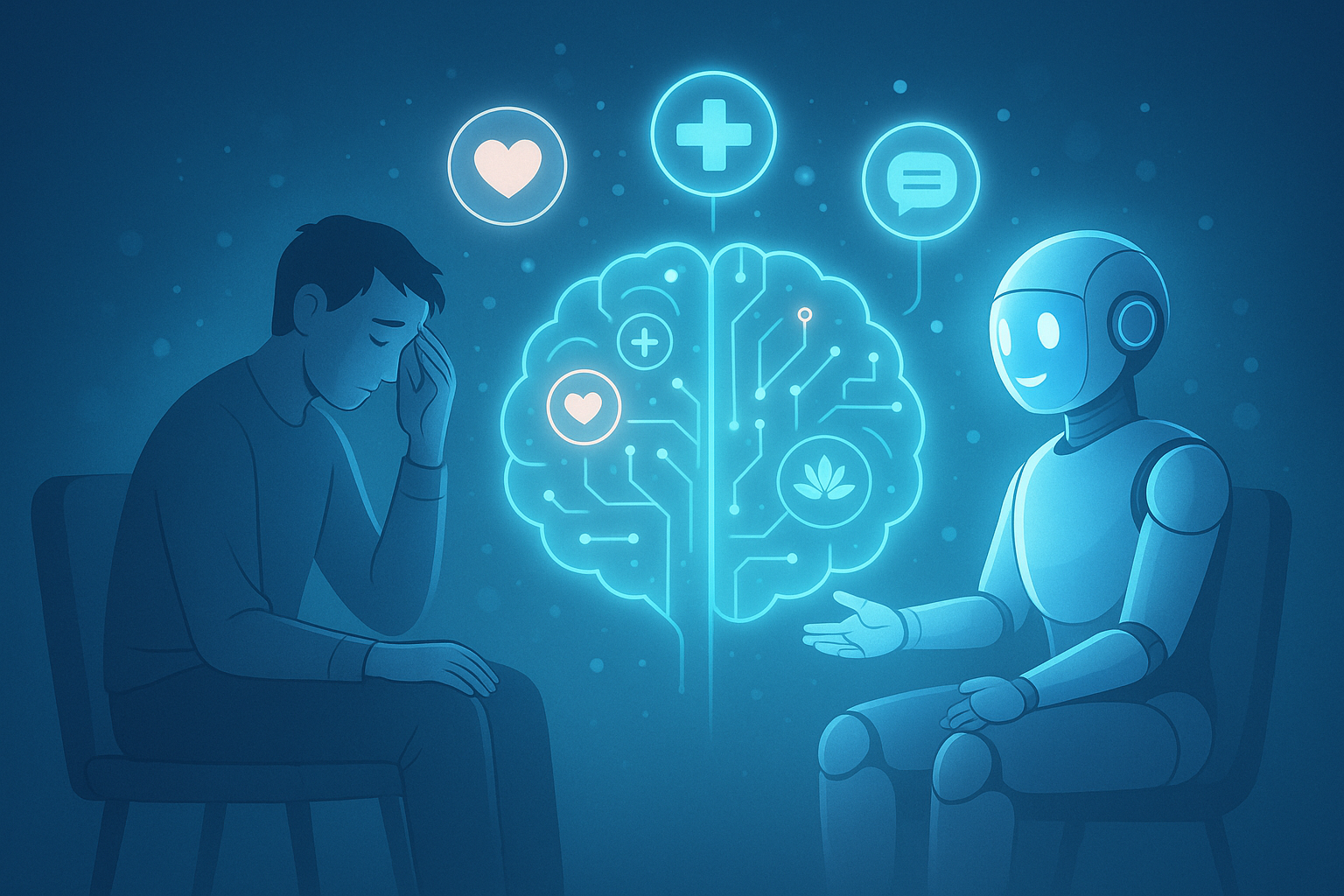
But like any disruptive technology, AI in mental health care brings both promise and peril. While AI can improve access and efficiency, it cannot replace the deep human connection and empathy that remain central to therapy. The real future lies in how AI and clinicians work together, creating a blended care model that combines the best of both worlds.
In this guide, we’ll explore how AI is reshaping mental health through seven major avenues — and what patients, providers, and policymakers should know to harness its benefits responsibly.
1. Expanding Access to Care
One of the biggest challenges in mental health care is accessibility. Millions of people struggle to find affordable, timely support due to geographic barriers, high costs, or a shortage of licensed therapists. According to the World Health Organization, nearly 1 billion people worldwide live with a mental disorder, but fewer than half receive treatment.
AI tools are addressing this gap by offering always-on support that people can access from their smartphones. For example:
Wysa: An AI-powered chatbot that guides users through stress, anxiety, and depression using evidence-based techniques. It has been downloaded by over 6 million people across 95 countries.
ChatGPT: Though not a therapist, it can provide immediate responses, self-help prompts, and reflective exercises — particularly valuable for those hesitant to speak with a clinician.
The anonymity and affordability of these platforms reduce stigma and create a safe first step for individuals who might otherwise avoid seeking help.
Case Example: In rural India, where psychiatrists are scarce, Wysa partnered with healthcare systems to deliver support in local languages, offering early interventions at scale.
Still, it’s important to stress: AI is a complement, not a replacement. For complex cases involving trauma, psychosis, or high-risk behaviors, human professionals remain indispensable.
2. Delivering Evidence-Based Support
Modern AI mental health apps don’t just “listen” — they apply structured, evidence-based methods like Cognitive Behavioral Therapy (CBT) or Acceptance and Commitment Therapy (ACT).
For instance:
Woebot Health uses AI to deliver daily CBT-based check-ins, helping users challenge negative thought patterns.
Studies show apps like these can reduce symptoms of anxiety and depression by ~30%, especially for people with mild-to-moderate conditions.
By automating low-intensity interventions, AI allows human therapists to focus their limited time on complex cases that require deeper expertise.
Imagine a college student experiencing exam-related stress. An AI CBT app could guide them through breathing exercises and reframing negative thoughts, helping them self-regulate. If symptoms escalate, the app can prompt escalation to a live therapist.
This model creates a tiered system of care — AI handles the “frontline” cases, while humans address deeper needs.
3. Early Detection & Prediction
AI’s ability to sift through massive datasets makes it a powerful tool for detecting early warning signs of mental health struggles.
Sources of Data:
Electronic health records
Wearable devices (tracking sleep, heart rate variability, activity)
Social media signals (language patterns linked to depression or suicidality)
For example:
A 2020 study found that AI models analyzing Instagram posts could predict depression with 70% accuracy, often months before clinical diagnosis.
AI systems are also being tested in suicide hotlines, flagging high-risk callers based on tone, word choice, and pauses.
Clinical Potential: If AI can alert providers early, interventions can occur before crisis peaks — reducing hospitalizations, ER visits, and even saving lives.
The challenge lies in privacy and ethics — who owns the data, and how do we ensure it isn’t misused? We’ll return to this later.
4. Personalized Insights & AI Journaling
Self-reflection is a cornerstone of mental wellness, and AI is making it more personalized, engaging, and data-driven.
Tools like MindScape and Reflectly combine behavioral sensing + generative AI prompts to encourage journaling and mindfulness. Instead of generic “How are you feeling today?” entries, these systems analyze your recent patterns and nudge you with tailored prompts like:
“You’ve been working longer hours this week. How is that affecting your energy levels?”
“Yesterday you mentioned anxiety before social events — would you like to explore that today?”
Benefits observed in trials:
Increased positive affect
Reduced anxiety and depression
Enhanced mindfulness and emotional clarity
AI journaling also provides trend analysis — helping users spot recurring triggers (e.g., poor sleep, conflict at work) and see how interventions are working over time.
5. Empathetic, Emotion-Aware AI
One of the biggest criticisms of early chatbots was their mechanical tone. Today, AI systems are increasingly capable of detecting emotional nuance in text, voice, and even facial expressions.
For example:
Ellie, an AI virtual therapist developed at USC, uses voice tone, posture, and micro-expressions to detect stress or sadness.
Emotion-aware AI can adjust its responses, offering validation and empathy rather than robotic advice.
However, ethics matter:
Escalation protocols must exist — if someone expresses suicidal ideation, AI should immediately connect them with crisis resources.
Transparency is key — users must know when they’re talking to AI vs. a human.
Done right, emotion-aware AI can make interactions feel comforting and supportive, while ensuring safety nets remain in place.
6. Augmenting Therapists’ Work
AI isn’t just helping patients — it’s making therapists’ jobs more efficient.
Key applications include:
Administrative automation: Scheduling, note-taking, and even insurance billing.
Clinical training: AI “standardized patients” simulate various psychiatric conditions for therapist training.
Decision support: AI synthesizes thousands of research papers, helping clinicians identify the best evidence-based treatments faster.
By offloading these tasks, therapists can devote more energy to the human connection at the heart of therapy.
Example: A psychologist could spend 20% less time on paperwork if AI handled SOAP notes, freeing more hours for direct patient care.
7. Immersive VR Therapy
AI-enhanced virtual reality therapy is revolutionizing exposure therapy and treatment for phobias, PTSD, and social anxiety.
Public Speaking Anxiety: Patients practice in a VR lecture hall, complete with simulated audience reactions.
PTSD Treatment: Veterans revisit safe, controlled simulations of traumatic sites, reducing flashbacks.
Phobias: From fear of flying to fear of spiders, VR allows graded exposure without real-world risk.
Clinical trials show VR therapy can be as effective as traditional CBT — with the added benefit of scalability.
As VR hardware becomes cheaper, expect these tools to move from clinics into home-based care.
Considerations & Risks
While promising, AI in mental health comes with serious risks:
Lack of Human Depth: AI can’t replicate the nuanced empathy and relational healing that human therapists provide.
Overdependence & Isolation: Teens and vulnerable individuals may become overly attached to AI companions, reducing real-world social interaction.
AI-Induced Distress: Researchers have coined the term “AI psychosis” to describe delusions triggered by excessive, isolating AI engagement.
Regulatory Concerns: Some states, like Illinois, have banned unsupervised AI in therapy, requiring licensed professional oversight.
These risks underscore the need for responsible use and regulation.
Best Practices for Safe AI Integration
To maximize benefits while minimizing harm:
Use AI as support, not a replacement for therapy.
Escalate serious cases (e.g., suicidality, psychosis) to human professionals.
Choose evidence-based tools with peer-reviewed research and crisis protocols.
Watch for overreliance — signs include withdrawal from friends or obsessive AI use.
Protect privacy by verifying data security policies.
Blend AI with human care — the best outcomes come from hybrid models.
Final Thoughts: AI + Humanity = The Future of Mental Health Care
Artificial intelligence has opened new doors in mental health, from 24/7 access and early detection to VR therapy and clinician support. The potential is enormous — a world where mental health care is cheaper, more accessible, and more personalized than ever before.
But AI is not a cure-all. The deepest healing still comes from human connection, compassion, and community. The real future lies in synergy — using AI to extend the reach of therapists, empower patients, and ensure no one is left without support.
In short, AI isn’t replacing mental health care. It’s transforming it into something more inclusive, data-driven, and scalable — while reminding us that at the core of every breakthrough must be humanity itself.
Here are a few helpful products to complement your mental health journey:
- Unfuck Your Brain uses scientific methods to help you overcome anxiety, anger, and emotional triggers—great for actionable, head-on strategies.
- Cleaning Up Your Mental Mess offers simple, proven steps to reduce stress and toxic thought patterns—like a mental detox.
- Happy Not Perfect guides you in challenging anxious thinking with a compassionate mindset.
Final Thoughts
AI brings tremendous potential to mental health—providing access, data-driven insights, and even companionship. But its power comes with responsibility. Use AI thoughtfully and alongside human care. And if you’re looking for grounded, self-help tools, the books above offer excellent support.
Let me know if you’d like help deep-diving into any specific AI tool or self-care strategy!
Amazon Affiliate Disclaimer. As an Amazon Associate, FitnessGeek.ai earns from qualifying purchases. This means we may earn a small commission when you buy through links on this page — at no extra cost to you. Thank you for supporting our content!
More Reading:
AI-Driven Meal Plans for Faster Muscle Growth: The Ultimate 2025 Guide
AI for Mental Health: Smarter Tools for Stress, Anxiety & Emotional Wellbeing