

Looking for the best teen soccer workouts to build strength, agility, and endurance? In this guide, we’ll share five science-backed training routines every young player should know—plus how AI fitness tools can personalize progress and keep training fun.
5 Best Teen Soccer Workouts
1. Core Stability Circuit
A strong core is much more than just six-pack abs — it’s the foundation of every movement in soccer. The core includes the muscles of the abdominals, obliques, lower back, and hips, all of which work together to stabilize the body and transfer power between the upper and lower body. Whether a player is shielding the ball from a defender, twisting to make a pass, or blasting a shot on goal, core stability makes each movement more efficient and powerful.
For young athletes, developing core strength is also key to injury prevention. A stable core reduces the strain on the spine and hips, while improving posture and movement mechanics. This means players can train harder, recover faster, and stay on the field longer without being sidelined by overuse injuries.
Key Benefits:
Enhances balance and kicking strength – A stable midsection allows players to stay upright under pressure and strike the ball with greater force and accuracy.
Reduces strain on the back and hips – Strong supporting muscles protect joints and reduce the risk of strains or overuse injuries common in soccer.
Improves rotational power for quick pivots and turns – Core muscles fuel explosive twisting motions, helping players change direction rapidly and outmaneuver opponents.
Supports endurance – A strong core delays fatigue, allowing players to maintain speed and technique even late in the game.
Boosts confidence on the ball – With greater stability, athletes feel more secure controlling and shielding possession against defenders.
Pro Tip: Planks, Russian twists, bicycle crunches, and medicine ball throws are all excellent exercises to build soccer-specific core strength.
Recommended Gear:
AI Boost: Volt Athletics adjusts reps/sets based on teen feedback.
2. Lower-Body Strength (Squats, Lunges, Kettlebells)
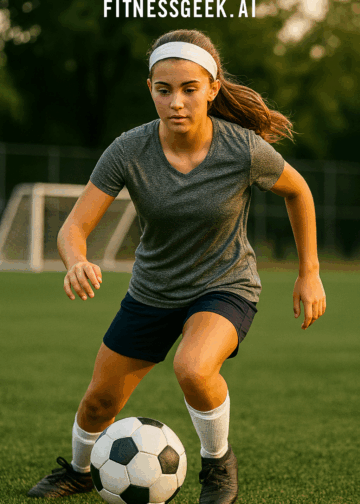
When it comes to soccer, leg strength is everything. From explosive sprints down the field to powerful kicks on goal, your legs are the engine that drives performance. Strong lower-body muscles not only help players move faster but also protect against common soccer injuries like ACL tears, hamstring pulls, and ankle sprains. By training the legs properly, athletes build a foundation of speed, stability, and endurance that supports every aspect of their game.
Key Benefits:
Stronger quads and hamstrings for sprints – Develop the explosive power needed to accelerate quickly and outrun defenders.
Better knee stability when cutting – Strong supporting muscles around the knees improve control during sudden changes of direction, reducing injury risk.
Improves jump height – Boosts performance in headers, defensive clearances, and aerial duels.
Enhanced endurance – Well-conditioned legs fatigue less quickly, keeping players sharp late into the second half.
Balanced strength – Training both the front and back of the legs prevents imbalances that can lead to overuse injuries.
Pro Tip: Exercises like squats, lunges, step-ups, and resistance band work are some of the best ways to build soccer-ready leg strength.
Recommended Gear:
AI Boost: Wearables track recovery to prevent overtraining.
3. Power and Explosiveness: Turning Training Into Game-Day Speed
In soccer, it’s not just about how fast you can run in a straight line — it’s about how quickly you can explode into motion. Quick bursts of power are what separate an average player from one who can sprint past defenders, jump higher for headers, and recover quickly for the next play. Training for explosiveness conditions both the muscles and the nervous system to fire rapidly, translating directly into better acceleration, agility, and endurance on the field.
Key Benefits:
Builds sprint acceleration – Strong, fast-twitch muscle development improves those first few steps that matter most in breakaways and defensive recoveries.
Improves jump and landing mechanics – Proper plyometric training not only helps players win aerial duels but also teaches safe landing patterns that reduce injury risk.
Enhances endurance for repeated sprints – Soccer is a stop-and-go sport; explosive training improves the ability to perform sprint after sprint without gassing out.
Boosts agility in tight spaces – Power training supports quicker pivots, turns, and changes of direction, all critical when dribbling through defenders.
Recommended Gear:
Resistance Bands – Great for resisted sprints, lateral shuffles, and activating key stabilizer muscles.
Agility Ladder – Builds foot speed, coordination, and explosive change of direction.
Plyometric Box – Ideal for jump training, explosive step-ups, and landing drills.
Weighted Vest – Adds extra challenge to sprints and jumps, developing more raw power.
Soccer Cones – Perfect for short shuttle runs, acceleration drills, and quick burst training.
Pro Tip: Incorporate short, intense sessions 2–3 times a week, focusing on quality over quantity. Explosive work should leave you feeling sharp, not drained.
4. Agility & Footwork Drills
In soccer, agility is everything. Being able to change direction on a dime, stay light on your feet, and react quickly to an opponent’s movement can mean the difference between stealing the ball or getting left behind. Fast, precise footwork also improves ball control, allowing players to dribble through defenders and maintain possession under pressure. For defenders, sharp agility drills build the ability to mirror opponents and cut off passing lanes.
Key Benefits:
Increases lateral quickness – Helps players shuffle side-to-side more efficiently, crucial for both marking attackers and breaking through defenses.
Improves balance when cutting – Strong footwork reduces slips or awkward steps during sharp turns, lowering the risk of ankle or knee injuries.
Boosts reaction time – Enhances a player’s ability to respond instantly to a loose ball, a sudden pass, or a defender closing in.
Sharpens ball control – Quick, controlled steps make dribbling smoother and more unpredictable for defenders.
Builds coordination – Improves the connection between foot speed and upper-body control, creating more fluid movement.
Recommended Drills & Gear:
Agility Ladder – Perfect for high-knee runs, in-and-out steps, and crossover footwork.
Cone Drills – Set up zig-zags or shuttle runs to simulate cutting and turning on the field.
Mini Hurdles – Train explosive quick steps while keeping proper running mechanics.
Reaction Ball – Unpredictable bounces improve reflexes and fast decision-making.
Pro Tip: Keep agility drills short and intense — think 15–30 seconds of all-out effort, followed by rest. Soccer demands repeated bursts of movement, so train the way you play.
Recommended Gear:
AI Boost: GPS trackers count turns and acceleration bursts.
5. Soccer IQ: The Mental Edge on the Field
Soccer isn’t only about who runs the fastest or kicks the hardest — it’s a game of decisions, awareness, and strategy. A player’s Soccer IQ refers to how well they read the game, anticipate plays, and make the right choices under pressure. Developing this mental side of performance is just as important as building speed or strength, because it directly impacts how effectively physical skills are used in real match situations.
High Soccer IQ helps athletes know when to press, when to hold, when to pass, and when to shoot. It also reduces wasted energy, as smarter positioning often means fewer frantic sprints to catch up. With today’s technology, AI-powered tracking tools can even analyze in-game movements, showing players where they excel and where they’re overexerting.
Key Benefits:
Better decision-making under pressure – Helps players stay calm and choose the smartest option in tight spaces.
Improves anticipation and positioning – Reading the field well allows players to cut off passes, find open space, and stay one step ahead of opponents.
Tracks fatigue and workload – Wearables and AI tools monitor distance covered, sprint intensity, and recovery needs, ensuring players don’t burn out.
Maximizes efficiency – Conserves energy by teaching players to be in the right place at the right time instead of chasing the ball unnecessarily.
Enhances team play – Smart players elevate those around them by making quicker, cleaner decisions.
Pro Tip: Encourage young athletes to watch professional matches and “read the game” — then pair that learning with AI-based video analysis apps that break down positioning, decision-making, and overall workload.
Recommended Gear:
AI Boost: Tools highlight weak spots (e.g., overusing one foot).
Conclusion
These teen soccer workouts—core, strength, plyometrics, agility, and cognition—help players dominate the field. With AI-powered training tools, workouts adapt to each athlete’s needs, making progress smarter and safer.
Next Steps: Try one workout this week, add the gear, and explore more guides at FitnessGeek.ai.
Amazon Affiliate Disclaimer
As an Amazon Associate, FitnessGeek.ai earns from qualifying purchases. This means we may earn a small commission when you buy through links on this page — at no extra cost to you. Thank you for supporting our content!